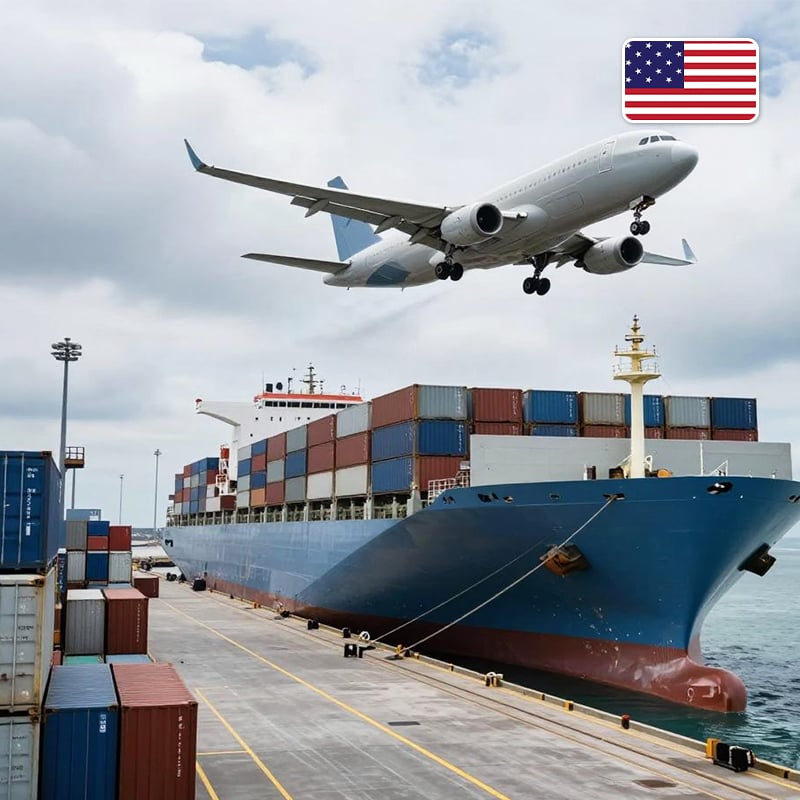
A shipping agent submits the Notice of Readiness (NOR) as soon as the vessel reaches the port’s designated waiting area—formally confirming it is ready to load or discharge cargo. This triggers the laytime clock under the charter party, making precise timing essential to avoid demurrage. The agent then negotiates berth allocation with the terminal operator, factoring in vessel dimensions, draft restrictions, cargo type, and tidal windows. Simultaneously, they arrange pilotage, tug assistance, and mooring gangs to ensure safe, timely docking. Proactive coordination at this stage minimizes idle time and sets the foundation for efficient cargo operations.
Before berthing, the agent compiles and validates all mandatory documentation—including the bill of lading, mate’s receipt, cargo manifest, crew list, and dangerous goods declarations—in full compliance with local port regulations and the IMO Facilitation (FAL) Convention. Each certificate is cross-checked against actual vessel and cargo details to prevent discrepancies that could trigger customs holds or port rejections. For hazardous cargoes, health and safety certifications are pre-verified and submitted in advance. Early, accurate document assembly eliminates clearance bottlenecks and shields the principal from avoidable penalties.
The shipping agent serves as the central point of contact among carriers, port authorities, customs officials, terminal operators, and supporting service providers. Prior to arrival, they disseminate the vessel’s confirmed estimated time of arrival (ETA), updated cargo manifests, and crew information to all stakeholders. Customs receives electronic pre-filings to accelerate risk assessment; the harbor master gains access to berth preferences and safety data; and the carrier receives real-time updates on port conditions and berth availability. This synchronized communication ensures alignment across all parties, reduces miscommunication, and significantly shortens port call duration—reinforcing the agent’s role as a critical enabler of seamless global trade logistics.
Shipping agents orchestrate discharge operations by coordinating stevedore teams and enforcing SOF-compliant handling sequences—preserving cargo integrity and minimizing port delays.
Agents direct unloading priorities according to cargo type, destination, and stowage plan requirements. They monitor real-time progress against the agreed discharge schedule and issue precise equipment allocation instructions to stevedores. Weight distribution is continuously verified to maintain vessel stability throughout operations, ensuring compliance with the Statement of Facts (SOF) and safeguarding both safety and contractual obligations.
Safety protocols are rigorously enforced during active operations. Agents coordinate equipment deployment around tidal windows to optimize efficiency and safety. Accommodation ladders undergo daily structural inspection by certified engineers to confirm load capacity and secure access. For hazardous or high-value cargo, independent surveyors are deployed to oversee handling procedures and verify regulatory compliance—adding an objective layer of accountability without disrupting workflow.
The shipping agent manages the critical transition of cargo from vessel to consignee, ensuring physical delivery aligns precisely with documentation while meeting all customs requirements.
Immediately after discharge, the agent oversees independent verification of cargo quantity and condition. For liquid bulk, ullage reports measure residual volumes; for breakbulk, tally sheets confirm unit counts. Pumping logs record transfer times, pressures, and line-clearing procedures—key evidence in contamination or shortage disputes. Discharge quality certificates, issued by accredited inspectors, formally attest that cargo condition matches the bill of lading description. This documentation chain prevents downstream claims and supports clean custody transfer.
Concurrently, the agent drives customs clearance by submitting the Transit Declaration (T2L) and validating tariff classifications against the Harmonized System. Commercial invoices are audited for declared value accuracy and correct Incoterms® application, while packing lists are finalized with actual landed weights, marks, and package counts—enabling precise duty calculation. According to the World Customs Organization (2023), such rigorous documentation discipline prevents clearance delays averaging 2.5 days per unresolved discrepancy. The agent bridges customs brokers and terminal operators to expedite cargo release—ensuring compliance never compromises speed.
A professional shipping agent eliminates port chaos, safeguards your cargo, and ensures compliance—so you can focus on growing your business. The wrong partner risks delays, penalties, or cargo damage, while a trusted shipping agent turns port operations into a seamless process.
GES Oriental Global is your China-based shipping agent with 26 years of B2B logistics expertise. We specialize in end-to-end port coordination, documentation management, customs clearance, and cargo safety for global importers and OEMs. With FMC/NVOCC certification, 100,000 sq. ft. self-operated overseas warehouses, and a dedicated U.S. truck fleet, we deliver reliable, transparent service with zero hidden fees.
Contact us today for a no-obligation consultation and customized cargo handling plan tailored to your import needs.
The Notice of Readiness (NOR) is a formal declaration by a vessel's shipping agent indicating that the ship is ready to load or discharge cargo. It marks the official start of the laytime period under the charter party agreement.
Documentation assembly ensures compliance with local port regulations and international conventions like the IMO FAL Convention. Proper documentation prevents delays caused by customs holds or discrepancies that could lead to penalties.
The shipping agent acts as a central coordinator between carriers, port authorities, customs, terminal operators, and associated service providers, ensuring seamless information flow and alignment throughout the shipping process.
Shipping agents enforce safety protocols such as monitoring tidal conditions, inspecting accommodation ladders, and deploying independent surveyors for high-value or hazardous cargo to ensure regulatory compliance and operational efficiency.
After discharge, the agent oversees cargo verification, ensures proper documentation such as ullage reports and pumping logs, and facilitates customs clearance to expedite cargo release to the consignee efficiently.
 Hot News
2024-11-15
2024-11-11
2024-11-06
2024-10-31
2024-10-28
2024-10-25
GES Oriental Global provides top-tier international freight forwarding services, specializing in Amazon, Walmart, express shipping, air, sea, truck, and China-Europe rail transport.


 EN
EN