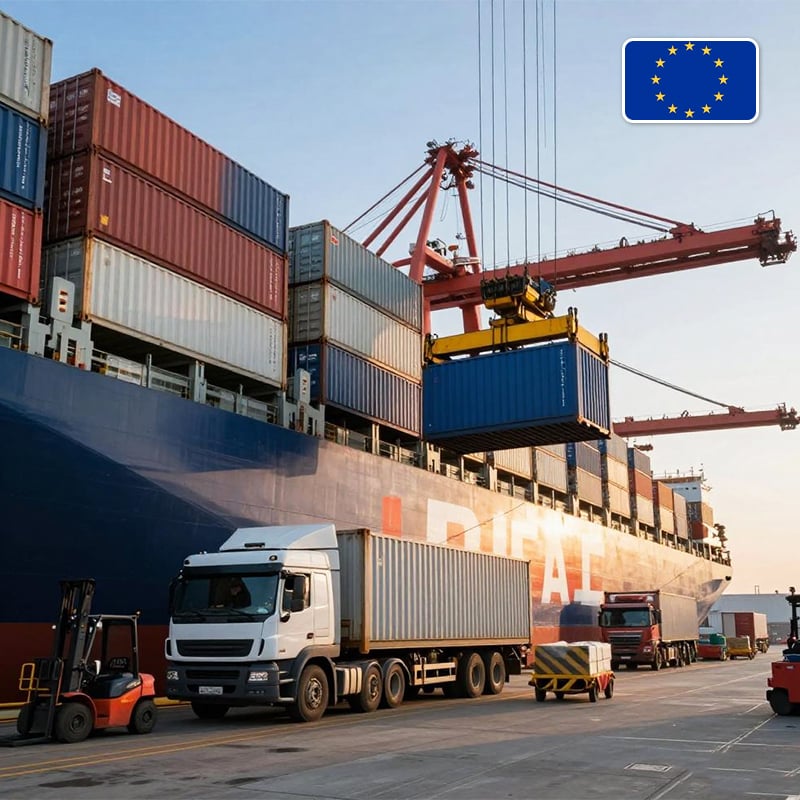
Navigating the complexities of global logistics demands specialized expertise that most Amazon sellers lack. An FBA forwarder serves as this critical partner—bridging the gap between international supply networks and Amazon’s stringent inbound protocols. They manage every step from origin to FBA warehouse, ensuring goods meet customs clearance requirements and Amazon’s shipping, labeling, and palletization rules. Attempting this independently often leads to costly delays, rejection due to non-compliance, and potentially abandoned shipments. Vetting your FBA logistics partner for proven Amazon experience is non-negotiable; without it, even minor paperwork mistakes or carrier mismanagement become catastrophic bottlenecks.
Your FBA forwarder becomes the linchpin securing supply chain integrity by aligning multiple parties: your factory, ocean/air carriers, U.S. Customs and Border Protection (CBP), and Amazon’s operations team. Key functions they orchestrate include:
Failure in any single area causes rejection. A professional FBA forwarder offers indemnity through meticulous prep, documentation, and customs brokerage directly integrated with shipment monitoring. Their established relationships with delivery appointment schedulers and FBA receiving docks are irreplaceable advantages over direct carrier coordination.
| Improvement Area | Seller-Managed | With FBA Forwarder |
|---|---|---|
| Supplier → FRC Transit Time | 48–60 days | 26–34 days |
| Customs Clearance Issues | 17% | 3–4% |
| Shipment Acceptance Rate | 79% | 97–99% |
Operational data consistently shows FBA forwarder-managed shipments achieve >95% first-attempt acceptance at fulfillment centers versus ~80% without. Delays from ISF filing mistakes drop to near zero as forwarders pre-vet all CBP documentation and automate electronic filing. This reliability unlocks faster restock cycles, reduces Amazon long-term storage fees, and minimizes out-of-stock penalties. Ultimately, a specialized FBA logistics partner elevates global supply chains from a cost center to a strategic asset.
A professional FBA forwarder secures your shipment’s entry into the U.S. by rigorously managing three critical compliance pillars: Importer Security Filing (ISF), customs clearance, and Delivered Duty Paid (DDP) execution. Missteps in any form invite delays, confiscation, or fines from U.S. Customs and Border Protection (CBP). For sellers shipping to Amazon FBA centers, compliance isn’t just paperwork—it determines whether your goods even reach the warehouse floor.
U.S. CBP has intensified enforcement of ISF-10 (ocean) and ISF-5 (air) filings, with average penalties for non-compliant importers reaching $740,000. Missing the 24-hour pre-load deadline triggers automatic holds. Carriers often lack the seller-specific details required for accurate ISF—such as HS codes, buyer/seller data, and container stuffing locations—which must align precisely with your commercial invoice. This precision prevents cargo holds at U.S. ports that stall FBA restocks. Forwarders integrate real-time tracking with customs brokerage to meet these rigorous timelines.
DDP shipping places full liability for duties and clearance on the seller. Top providers embed pre-clearance solutions: validating HS codes against official CBP rulings, locking in duty rates pre-shipment, and paying tariffs electronically before goods dock. Contrast that with DDU (Delivered Duty Unpaid), where surprise fees can strand pallets until payment. Forwarders also manage Terminal Handling Charges (THC) and Port Fees upfront—eliminating unexpected costs and acceleration fees for time-sensitive FBA deliveries.
For Amazon sellers navigating complex cross-border logistics, risk mitigation strategies form the backbone of supply chain resilience. An FBA forwarder provides operational control by implementing critical safeguards:
Comprehensive cargo insurance transfers financial liability from weather damage, theft, and transit accidents—incidents that cost e-commerce businesses an estimated $50 billion annually in freight claims. Real-time monitoring complements this through GPS-tracked location data, temperature sensors for sensitive goods, and automated exception alerts.
Key capabilities include:
This system creates digital twin visibility throughout the Fulfillment By Amazon (FBA) journey, allowing 94% of shipment exceptions to be resolved preemptively—before triggering Amazon penalties.
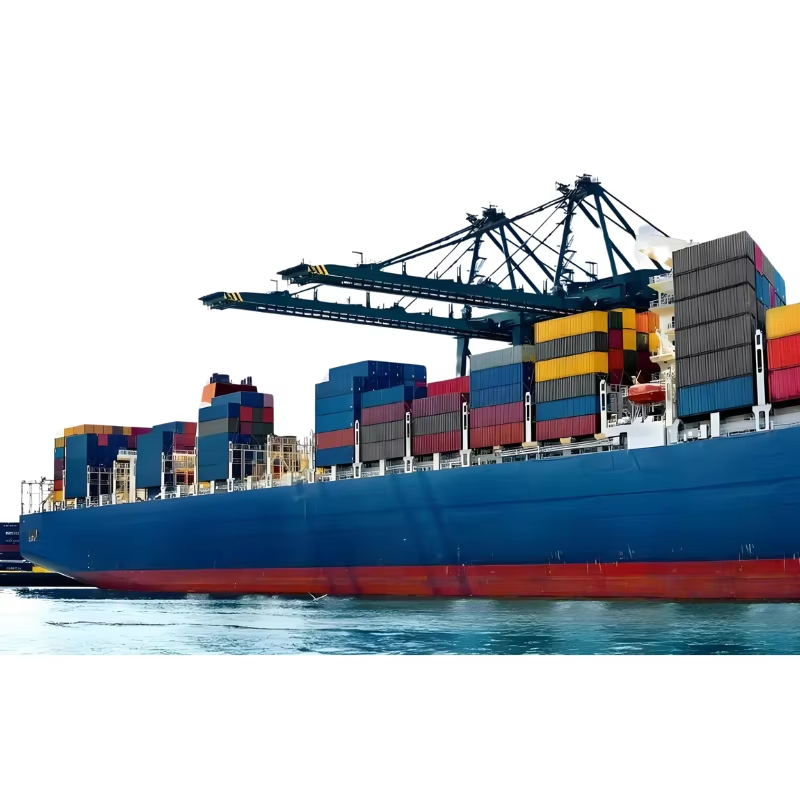
Amazon Global Logistics (AGL) provides a standardized solution for FBA sellers, but its limited origin points—primarily China and Hong Kong—and rigid compliance terms can constrain growing businesses. A dedicated FBA forwarder overcomes these limits by offering flexible sourcing from multiple countries, customizable carrier choices, and transparent pricing. While AGL works well for straightforward, high-volume shipments, specialized forwarders excel in handling seasonal storage caps, multi-channel fulfillment, and complex regulatory requirements like DDP and ISF filing. Sellers who switch to a specialized partner often gain tighter control over shipping timelines and avoid hidden fees. The human-driven, adaptable service of a forwarder also reduces miscommunication and accelerates problem resolution—critical advantages as international regulations tighten. For sellers prioritizing agility over automation, a specialized FBA forwarder consistently outperforms Amazon’s one-size-fits-all logistics.
An FBA forwarder is a logistics partner who specializes in managing the transportation, customs clearance, and compliance requirements of shipments sent to Amazon fulfillment centers globally.
Managing Amazon FBA logistics independently can result in costly mistakes, non-compliance with Amazon’s standards, customs delays, and rejected shipments. A forwarder’s expertise ensures streamlined and compliant operations.
DDP (Delivered Duty Paid) means the seller handles all duties and clearance fees upfront, ensuring the cargo moves directly to its destination without delays. DDU (Delivered Duty Unpaid) leaves duties unpaid, potentially causing delays at ports if surprise fees need to be settled.
FBA forwarders ensure accurate filing of Importer Security Filings (ISF), validate HS codes, and handle customs bonds, preventing penalties, delays, or confiscation of goods.
FBA forwarders provide greater flexibility, personalized service, and agility in managing complex shipments across diverse countries, which is often superior to Amazon's standardized logistics service.
 Hot News
2024-11-15
2024-11-11
2024-11-06
2024-10-31
2024-10-28
2024-10-25
GES Oriental Global provides top-tier international freight forwarding services, specializing in Amazon, Walmart, express shipping, air, sea, truck, and China-Europe rail transport.

 EN
EN