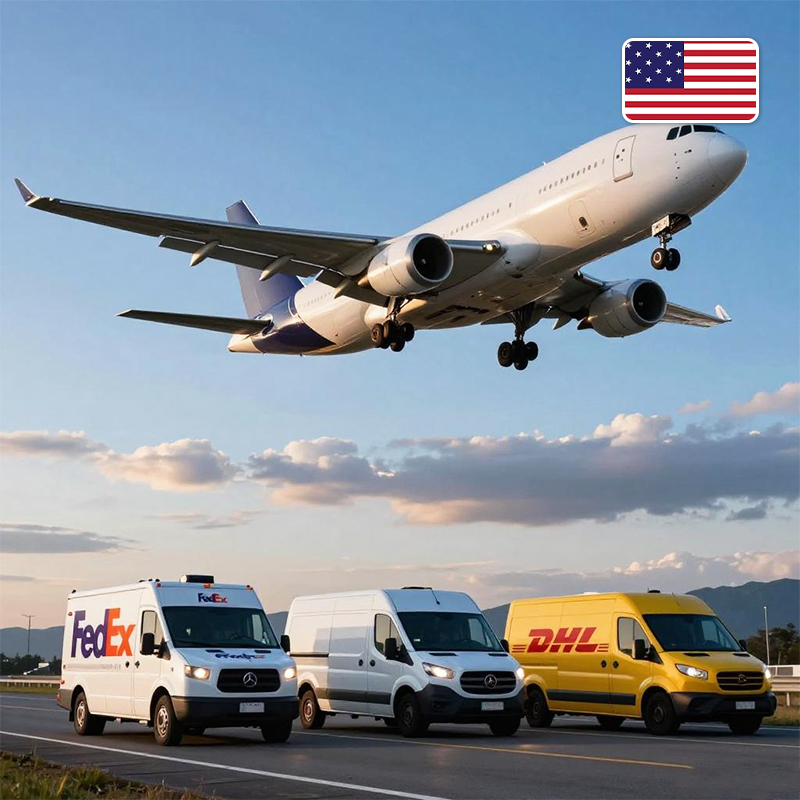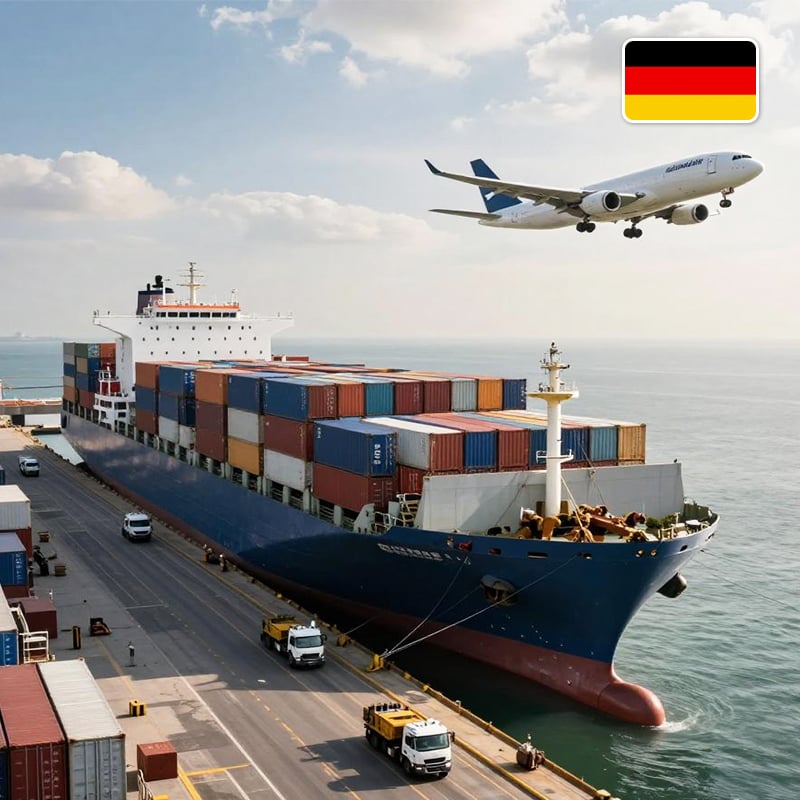
Reliable China to USA shipping transforms logistics from a cost center into a competitive advantage. When entering the U.S. market, consistent transit times and predictable costs enable faster product launches and smarter inventory scaling—reducing both stockouts and excess capital tied up in warehousing. Agile supply chains let brands respond to demand shifts in real time, turning fulfillment into a growth accelerator. With U.S.-China bilateral trade exceeding $575 billion in 2023, stable, well-managed shipping lanes are no longer optional—they’re foundational to market viability.
A direct-to-consumer home goods brand exemplifies how multimodal shipping fuels scalable growth. By aligning transport mode with product lifecycle—air freight for high-demand launches, sea freight for bulk restocking, and rail for mid-urgency orders—the company maintained 98% on-shelf availability while cutting freight costs by 30%. This strategic flexibility enabled revenue to climb from $2 million to $44 million in four years—a 22x increase. The lesson is clear: matching shipping method to business need—not just cargo type—is what separates reactive logistics from growth-enabling infrastructure.
Choosing the right China to USA shipping method directly affects how fast—and how profitably—a business can scale. Each mode offers a distinct balance of speed, cost, and control. The table below outlines key trade-offs for expansion-minded brands.
| Method | Typical Transit Time | Cost Level | Best For |
|---|---|---|---|
| Sea freight | 25–40 days | Low | Bulk inventory, non-urgent restocks |
| Air cargo | 3–10 days | High | Urgent orders, high-value or time-sensitive goods |
| Rail/truck (overland) | 15–25 days | Medium | Mid-urgency shipments, scheduled warehouse replenishment or Amazon FBA deliveries |
Sea freight remains the economic backbone for large-volume U.S. market entry. Its 25–40 day transit window supports planned inventory cycles, delivering the lowest cost per unit—ideal for base stock and slow-moving SKUs. Air cargo, by contrast, compresses delivery to 3–10 days, making it indispensable for capturing demand spikes, launching seasonal products, or supporting promotional campaigns. While air freight carries a higher per-kilogram cost, that premium pays off when speed translates directly to revenue. The most effective strategies combine both: sea for core inventory, air for fast-turn SKUs—preserving margin and velocity.
Overland routes—rail from Chinese inland hubs to U.S. West Coast ports, followed by trucking to final destinations—offer a compelling middle ground. With transit times of 15–25 days, they deliver greater schedule certainty than ocean freight while costing significantly less than air. These corridors excel for brands requiring reliable, repeatable delivery windows—especially for Amazon FBA replenishment or regional warehouse stocking. Rail avoids ocean congestion and weather-related delays; trucking adds last-mile responsiveness. As cross-border rail infrastructure matures, overland options are evolving from niche alternative to a dependable third pillar in scalable China to USA shipping architecture.
The 2025 phaseout of the $800 de minimis threshold will fundamentally reshape China to USA shipping economics for small and midsize businesses. Currently, shipments valued under $800 enter duty-free with minimal customs friction. Once the threshold declines, many SMBs relying on low-value, high-frequency replenishment will face new tariffs, classification requirements, and documentation burdens. A $500 order could incur duties ranging from 3% to 25%, depending on product category—eroding margins by 8–12 percentage points for DTC brands operating on thin margins. Forward-looking companies are already adapting: splitting large orders into compliant parcels pre-deadline, shifting to bonded sea freight warehousing, or rebalancing modal mix toward bulk ocean for core SKUs and air for time-critical launches. Success hinges not on avoiding regulation—but on modeling its impact early and embedding compliance into expansion planning.
U.S. Customs and Border Protection’s ACE 2.0 platform leverages artificial intelligence to streamline import compliance—delivering tangible value for brands scaling via China to USA shipping. Real-time document verification, automated risk scoring, and instant HS code validation cut clearance delays by up to 40%. Growth-ready importers integrate ACE 2.0 with internal compliance dashboards and automated data feeds from vetted freight forwarders—ensuring every shipment aligns with current de minimis rules, tariff classifications, and valuation standards. The result is predictable release timing, lower penalty exposure, and fewer manual interventions—critical enablers for maintaining fulfillment velocity at scale.
Strategic technology integration and disciplined carrier selection form the operational foundation for resilient China to USA shipping—essential for hitting expansion milestones. Real-time shipment tracking across trans-Pacific routes enables proactive delay mitigation, especially valuable given that nearly one in four shipments still experiences unplanned disruptions. Equally important is partnering with carriers and forwarders who demonstrate deep port familiarity, multimodal contingency planning, and transparent performance reporting. Brands that prioritize predictive analytics, API-driven visibility, and partner vetting report 40% fewer expedited freight charges and achieve 89% on-time arrival consistency. This level of predictability doesn’t just reduce firefighting—it becomes the operational bedrock that lets growth proceed without fulfillment bottlenecks.
Reliable China to USA shipping ensures consistent transit times and predictable costs, which helps businesses launch products faster, manage inventory effectively, and respond swiftly to market demand.
Sea freight is ideal for bulk inventory and non-urgent restocks, air cargo is suited for urgent and time-sensitive shipments, and rail/truck combinations balance speed and cost for mid-urgency shipments.
The phaseout of the $800 threshold will lead to increased tariffs and documentation requirements for shipments valued below $800. SMBs will need to adapt by rethinking their shipping strategies and incorporating compliance into their planning.
CBP’s ACE 2.0 platform uses AI-powered tools to streamline import compliance by verifying documents, automating risk assessment, and validating HS codes, reducing delays and compliance issues for businesses.
Real-time shipment tracking and predictive analytics offer proactive delay mitigation, while partnerships with experienced carriers ensure consistent on-time delivery—a critical factor for maintaining scalability.
 Hot News
2024-11-15
2024-11-11
2024-11-06
2024-10-31
2024-10-28
2024-10-25
GES Oriental Global provides top-tier international freight forwarding services, specializing in Amazon, Walmart, express shipping, air, sea, truck, and China-Europe rail transport.
 EN
EN