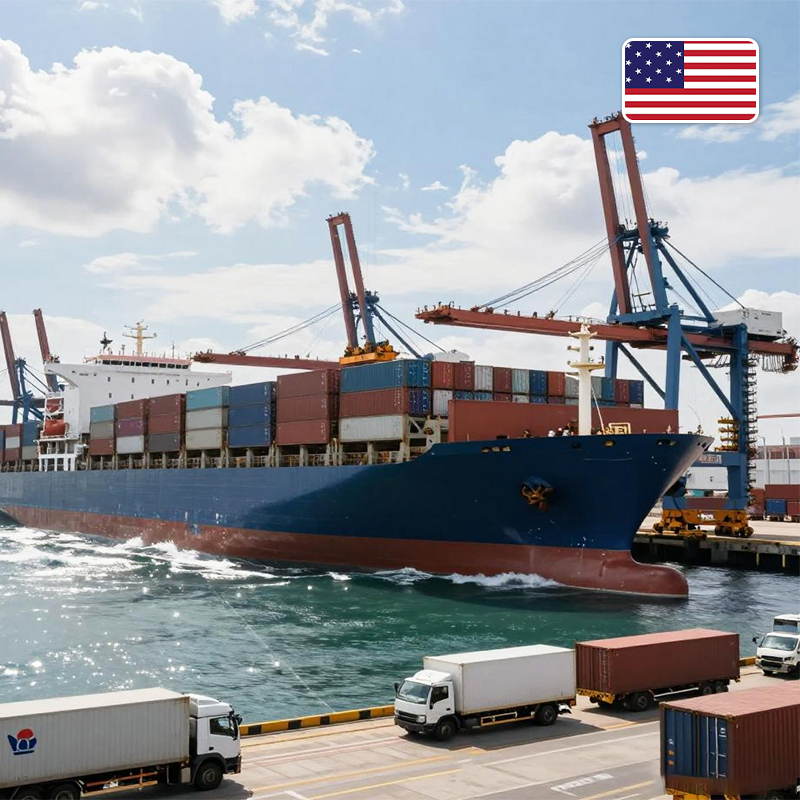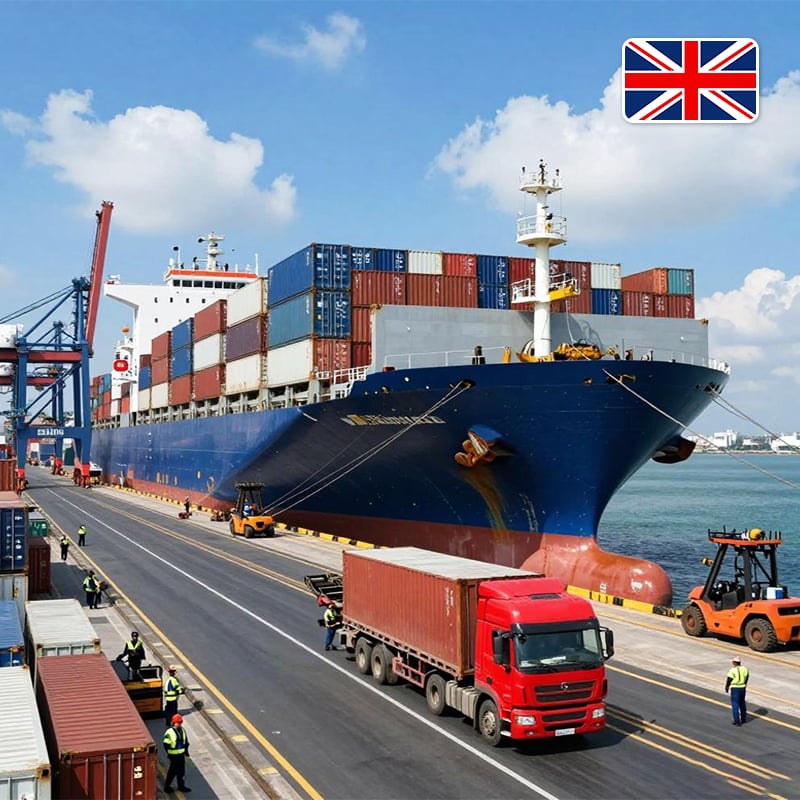
Over 60% of customs delays stem from documentation errors—primarily incorrect Harmonized System (HS) codes (32% of holds) and inaccurate commercial invoices (28% of inspection delays), per the 2024 Global Trade Analysis. Ensure all documentation precisely matches physical cargo, especially for regulated items requiring FDA or FCC certification. Physical inspections are most likely when shipments originate from high-risk countries like China—particularly textiles—or contain non-compliant wood packaging (violating ISPM-15) or suspicious agricultural products. For Uyghur Forced Labor Prevention Act (UFLPA) compliance, maintain auditable records of supply chain due diligence; deficiencies triggered $1.2B in detained shipments in 2023.
Validated Customs-Trade Partnership Against Terrorism (C-TPAT) members experience 70% fewer inspections and 72% faster clearance times, according to U.S. Customs and Border Protection (CBP). Manufacturers gain immediate advantages by implementing rigorous security protocols across four layers: personnel screening, container integrity, conveyance tracking, and facility access controls. Independent analysis shows participants reduce customs-related costs by $28,000 annually per shipment lane. Beyond speed, C-TPAT status grants front-of-line privileges during port congestion and enables mutual recognition with trusted trader programs including Canada’s Partners in Protection (PIP) and Mexico’s Nuevo Esquema de Empresas Certificadas (NEEC).
High-value shipments face elevated risks—from theft to accidental damage—during transit. Standard carrier liability often covers only a fraction of true value. Combining strategic insurance with robust physical security ensures goods retain their worth from origin to final delivery.
Cargo insurance is essential for shipments valued above $100,000—or for high-risk categories like electronics, pharmaceuticals, and industrial machinery. Basic carrier liability typically compensates based on weight or piece count, leaving shippers exposed to significant shortfalls. “All Risk” policies cover the full declared value against theft, breakage, natural disasters, and even extended port delays. For example, if a $500,000 piece of equipment is damaged and the carrier’s liability limit is $300,000, the shipper absorbs the $200,000 gap—unless fully insured. When shipping to the USA, verify that coverage extends door-to-door, including inland transit. The premium represents a small, calculated investment against potentially catastrophic loss.
Physical security remains the first line of defense against cargo theft—which costs the global logistics industry billions annually. Prioritize logistics partners with TAPA (Transported Asset Protection Association) certification, which mandates secure facilities, tamper-evident seals, and strict access controls. Supplement this with real-time GPS tracking, hardened locks, and pre-shipment documentation—including photographs and serial numbers for every item. At U.S. ports, storing cargo in CBP-bonded warehouses or secured yards significantly reduces theft risk. For fragile, high-value items, shock and tilt indicators provide objective evidence of handling events—strengthening claims and deterring mishandling. Together, these measures form a resilient, layered defense.
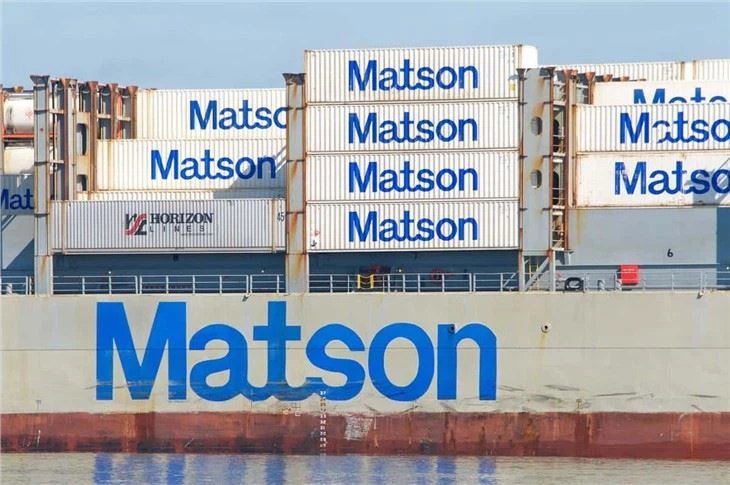
The complexity of modern supply chains makes real-time visibility a critical tool—not just for tracking, but for proactive risk mitigation. Instead of reacting to delays after they occur, businesses can anticipate and resolve issues before they escalate. Real-time tracking systems deliver continuous updates on location, status, and environmental conditions, enabling logistics teams to identify early warning signs—like customs holds or port congestion at hubs such as the Port of Los Angeles—and act decisively. Frost & Sullivan identifies supply chain visibility as the most sought-after service among shippers, underscoring its role in reducing uncertainty and operational friction. With precise, actionable intelligence, companies maintain control over transit timelines, uphold customer commitments with accurate ETAs, and preserve trust throughout the shipping-to-USA journey.
Real-time tracking transforms risk management from reactive to anticipatory. Continuous monitoring allows early detection of disruptions—including unexpected customs detentions, vessel schedule slippage, or routing anomalies—enabling swift countermeasures: adjusting safety stock levels, coordinating alternate carriers, or notifying downstream partners. In maritime shipping fulfillment, this level of insight is often the difference between minor delays and costly supply chain breaks. Ultimately, timely, granular data empowers decision-makers to protect both schedule integrity and product value across the entire import journey.
A diversified supply chain is the cornerstone of reliable shipping to the USA. Overreliance on a single region, carrier, or port magnifies vulnerability to geopolitical shifts, labor disputes, natural disasters, or infrastructure bottlenecks. According to the U.S. Chamber of Commerce, more than 90% of American companies are actively implementing or planning supplier diversification—and over 75% now source from multiple geographies to mitigate disruption impact. Effective strategies include nearshoring to Mexico or Central America, regional sourcing within ASEAN or LATAM, and contracting with at least two ocean carriers and three air freight providers. This flexibility allows rapid rerouting through unaffected ports—such as shifting from Los Angeles to Savannah or Charleston—ensuring continuity, cost stability, and long-term resilience.
1. What are the most common documentation errors that cause customs delays?
Errors like incorrect Harmonized System (HS) codes and inaccurate commercial invoices are common, contributing significantly to customs delays.
2. What is C-TPAT, and how does it benefit shippers?
C-TPAT (Customs-Trade Partnership Against Terrorism) is a program that enhances supply chain security. Members enjoy faster clearance times, fewer inspections, and reduced customs-related costs.
3. Why is cargo insurance important for high-value shipments?
Cargo insurance protects shipments valued over $100,000 or high-risk items like electronics against theft, damage, and other losses, bridging gaps in basic carrier liability coverage.
4. How can physical security measures reduce theft and damage?
Using TAPA-certified partners, tamper-evident seals, GPS tracking, and CBP-bonded storage effectively mitigates risks of theft and damage during transit.
5. How does real-time tracking improve shipping to the USA?
Real-time tracking delivers precise updates, enabling businesses to anticipate issues like customs holds and port congestion, thus minimizing disruptions and delays.
6. What are the benefits of a diversified supply chain?
A diversified supply chain minimizes dependencies on single points of failure, ensuring resilience against geopolitical shifts, natural disasters, and labor disputes.
 Hot News
2024-11-15
2024-11-11
2024-11-06
2024-10-31
2024-10-28
2024-10-25
GES Oriental Global provides top-tier international freight forwarding services, specializing in Amazon, Walmart, express shipping, air, sea, truck, and China-Europe rail transport.


 EN
EN