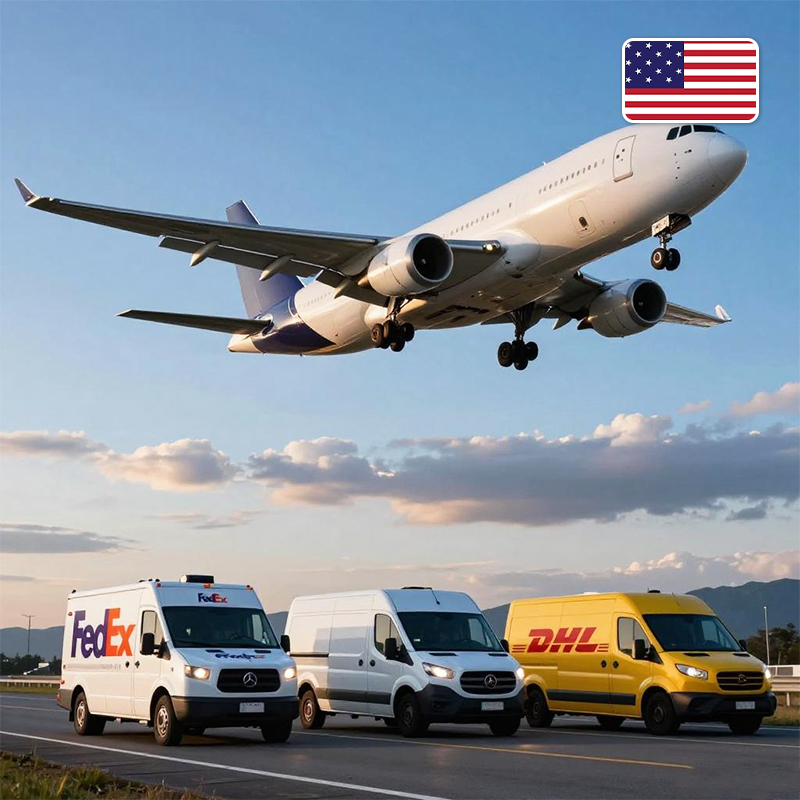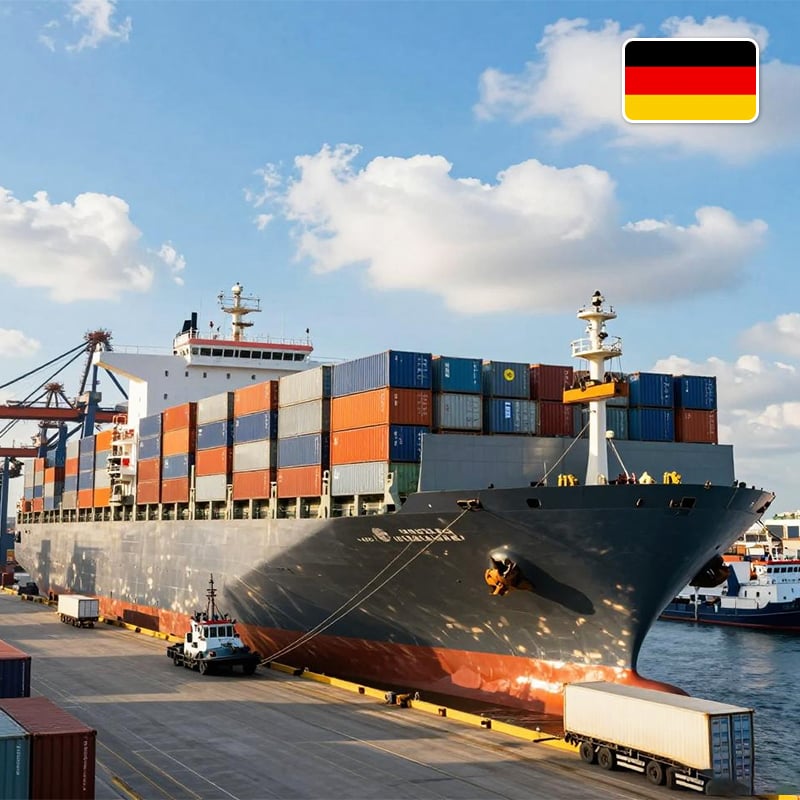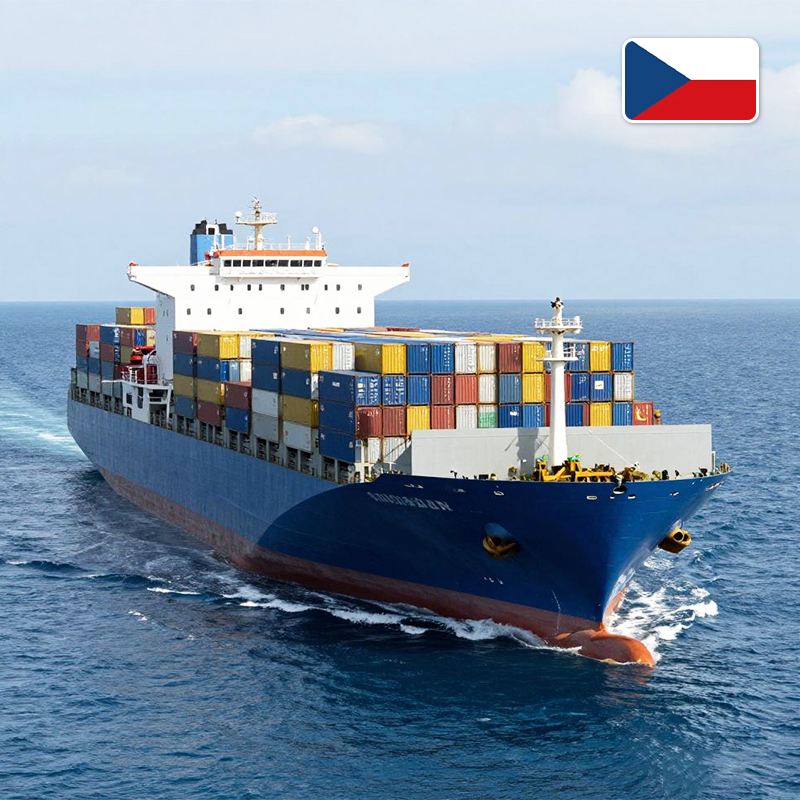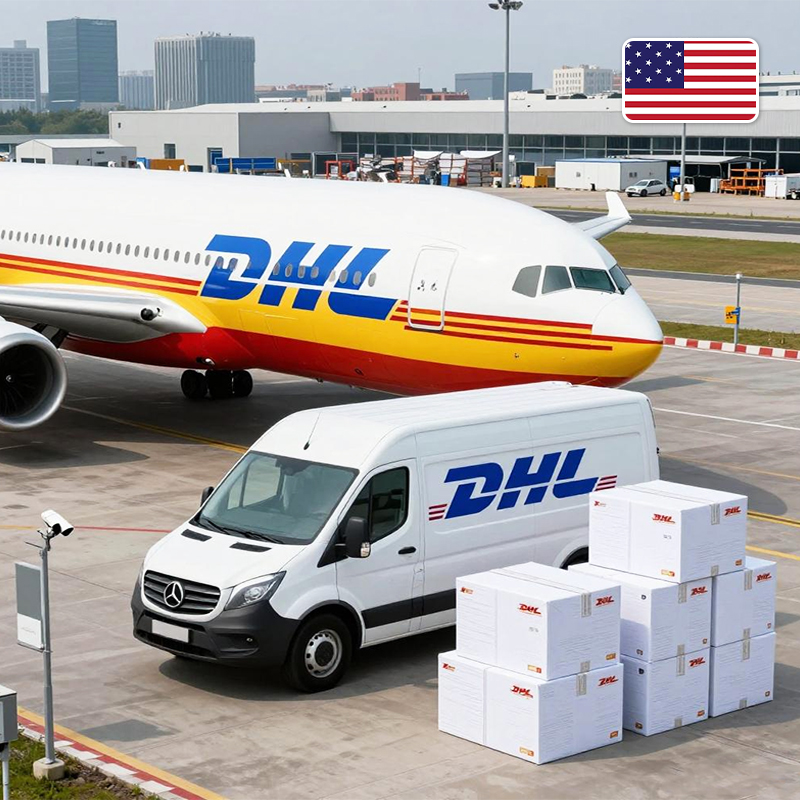
Start by pulling every invoice related to moving goods. Compare actual freight spend against booked rates for each shipment mode—ocean, air, or parcel—to spot consistent overcharges or rate drift. Analyze transit times not just for speed, but for predictability: a slower, fixed-schedule ocean service may reduce inventory volatility more effectively than an expedited air lane that arrives inconsistently. Crucially, map each shipment’s Incoterm (e.g., FOB, CIF, DAP) against your internal delivery milestones. Using FOB Shanghai when your U.S. warehouse depends on real-time, door-to-door visibility often triggers last-minute air-freight top-ups or third-party logistics surcharges. Aligning terms with operational needs—not just convention—eliminates reactive cost spikes before they occur.
The quoted freight rate is only the starting point. Demurrage and detention—fees for exceeding free time at ports or rail yards—can add $1,500–$5,000 per container, especially during peak season or port congestion. Customs delays caused by incorrect HS codes, missing FDA or FCC certifications, or inconsistent product descriptions stall cargo in bonded warehouses, inflating storage and insurance costs. Documentation mismatches—such as commercial invoices listing different quantities or values than packing lists—trigger CBP re-inspections, pushing deliveries back by 3–10 business days. As noted in a 2024 Descartes Global Trade Management Report, over 68% of importers first identify these charges after invoicing, turning them into unavoidable write-offs. Proactive auditing transforms these line items from surprises into managed, budgeted expenses.
When evaluating shipping from China to USA, the ocean-versus-air decision must go beyond headline freight rates. Total landed cost—including transportation, duties, insurance, customs brokerage, inland drayage, and warehousing—often shifts the economic advantage. Ocean freight delivers the lowest per-unit cost for volume-driven shipments (typically >1 CBM), but its 20–40 day transit window ties up working capital and increases demand-forecasting risk. Air freight compresses lead time to 3–7 days, cutting inventory carrying costs by up to 40% and enabling faster response to promotions or stock-outs—but at 4–6× the per-kilogram cost. The break-even point hinges on your cost of capital, gross margin, and inventory turnover. For high-value, low-volume goods like medical devices or seasonal apparel, air often wins on net profitability; for bulky, low-margin items like furniture or industrial components, ocean remains optimal. Use a landed-cost calculator that incorporates your actual inventory financing rate—not industry averages—to make product-level decisions.
For shipments under 15–20 CBM, Less-than-Container-Load (LCL) consolidation offers a strategic middle ground between parcel and full-container ocean freight. By pooling smaller consignments into shared containers, LCL spreads fixed costs—container rental, origin handling, documentation, and U.S. destination deconsolidation—across multiple shippers, reducing per-unit expense by 15–30% versus air or fragmented small-parcel solutions. Effective implementation requires three levers: consolidating orders from multiple Chinese suppliers into one weekly LCL departure; optimizing carton dimensions and weight to minimize dimensional (DIM) weight penalties; and partnering with a forwarder offering scheduled, predictable consolidation windows—not just ad-hoc groupings. While LCL adds 3–7 days for origin processing and deconsolidation, advance scheduling and ISF filing can prevent port delays. When aligned with order cycles and warehouse receiving capacity, LCL delivers scalable, repeatable savings without sacrificing control.
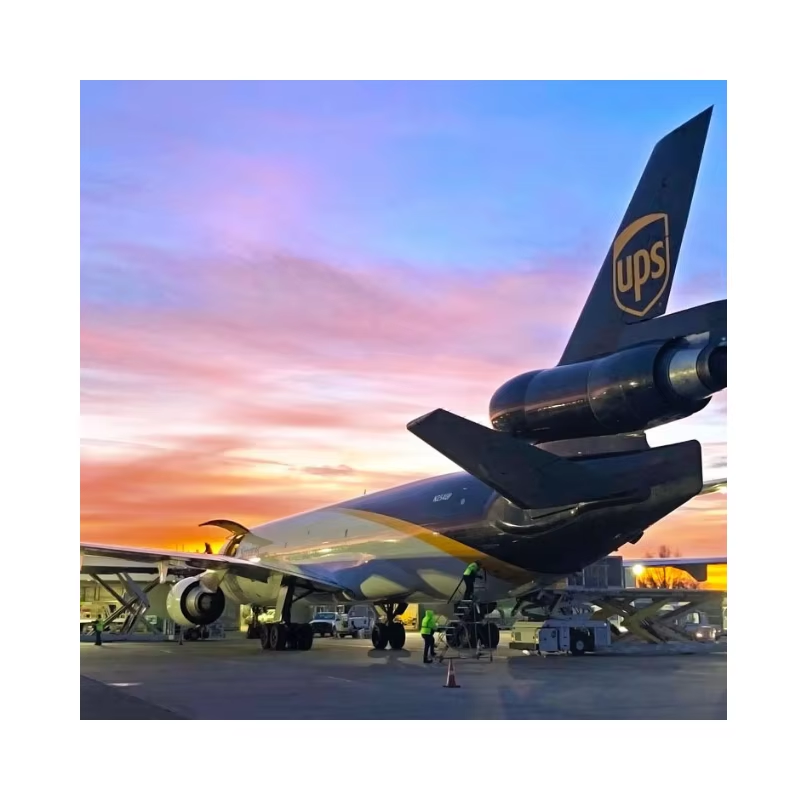
Proper customs compliance is a powerful lever for lowering the total cost of shipping from China to USA. Many importers overlook the fact that strategic customs planning can legitimately reduce duty payments while preventing costly delays, inspections, and penalties that inflate landed costs.
Accurate Harmonized Tariff Schedule (HTS) classification is the foundation of duty optimization—and a common source of avoidable overpayment. A misclassified item (e.g., labeling a smartwatch as “wrist-worn electronics” instead of “telecommunications equipment”) can trigger a 2.5% duty instead of 0% under HTS 8517.13.00, or miss eligibility for GSP or USMCA preferences entirely. Work with a licensed customs broker or validated classification software to audit key SKUs annually—not just at onboarding. Pair this with pre-clearance discipline: submit ISF at least 72 hours pre-loading, use ABI for real-time entry status, and pre-file entries where possible. According to CBP data, importers using ABI and timely ISF submission experience 30% fewer holds and cut average clearance time by 2–4 days. Combined with periodic reviews of duty drawback opportunities and bonded warehouse utilization, this approach delivers predictable, defensible duty exposure—turning compliance from a cost center into a value driver.
Technology plays a central role in reducing shipping from China to USA costs over the long term. A modern transportation management system (TMS) centralizes freight data across modes and carriers, automates rate benchmarking against contract terms, and flags discrepancies before payment. Real-time tracking platforms integrated with port and rail APIs—like those offered by project44 or FourKites—alert teams to dwell time thresholds, enabling proactive container pickup and avoiding demurrage. When these tools connect directly with supplier ERP systems and forwarder platforms via API, you gain end-to-end visibility that supports inventory allocation, carrier performance scoring, and dynamic rerouting.
Partner alignment amplifies the impact of technology. Prioritize freight forwarders and customs brokers that offer two-way API integration, shared dashboards, and SLA-backed KPIs—not just email-based updates. Jointly track metrics like on-time departure, customs release time, and cost-per-CBM, reviewing them quarterly to identify root causes of variance. This collaborative rigor enables data-driven renegotiation—not just on rates, but on process accountability. By embedding technology within aligned partnerships, you convert tactical savings into a self-correcting, continuous improvement loop.
Hidden costs include demurrage and detention fees, customs delays, documentation errors, and storage/insurance fees due to stalled cargo. Proactive auditing can help uncover and manage these expenses.
Choose based on factors such as total landed cost, lead time impact, inventory turnover, and product value. Ocean is ideal for bulky, low-margin goods, while air suits high-value, low-volume goods needing faster delivery.
LCL is a strategy that pools smaller consignments from multiple shippers into shared containers, lowering per-unit costs and offering scalability for shipments below 15–20 CBM.
Compliance reduces duty payments, prevents delays, and avoids penalties. HTS code optimization and timely ISF submissions are crucial for smoother customs clearance.
A TMS, real-time tracking platforms, and APIs connecting ERP systems can centralize freight data, flag discrepancies, and offer end-to-end visibility, reducing shipping costs effectively.
 Hot News
2024-11-15
2024-11-11
2024-11-06
2024-10-31
2024-10-28
2024-10-25
GES Oriental Global provides top-tier international freight forwarding services, specializing in Amazon, Walmart, express shipping, air, sea, truck, and China-Europe rail transport.




 EN
EN