Physical offices in China do not guarantee operational effectiveness. Many forwarders maintain local bureaus yet still deliver inconsistent outcomes. Prioritize partners who demonstrate:
Scrutinize the actual competence of their on-ground teams—not just headcount or office addresses. Review case studies showing how they resolve common China logistics failures: customs documentation errors, port clearance delays, and communication breakdowns during inspections. Operational slips at this stage cause 72% of cross-border shipment failures, according to AsiaTrade Hub’s 2024 Supply Chain Resilience Report. Verify critical documents yourself using trusted platforms like the AsiaTrade Hub portal, which integrates with GACC’s e-Customs system for real-time validation.
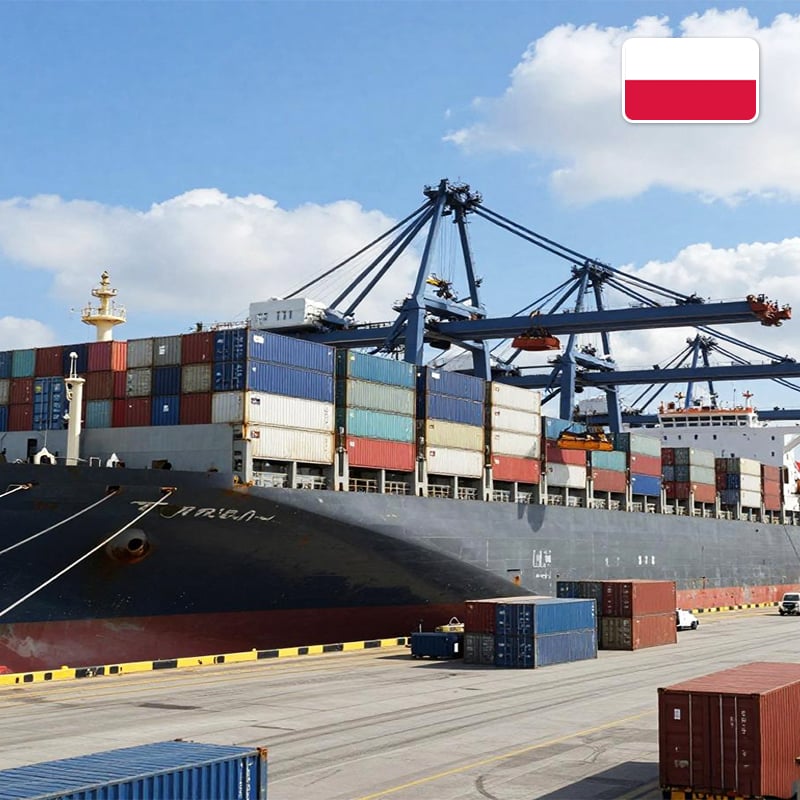
Shanghai handles the highest container volume globally—ideal for large bulk shipments—but its scale and regulatory density demand forwarders with established relationships with Shanghai port authorities and customs officials.
Shenzhen excels for electronics and high-value goods requiring specialized handling, especially under strict export control inspections administered by MOFCOM and MIIT. Partners must hold valid export compliance certifications and demonstrate experience navigating Shenzhen’s rapid inspection cycles.
Ningbo-Zhoushan dominates bulk commodities and oversized cargo, with deep connectivity to Yangtze River Delta manufacturers. Effective support here requires purpose-built assets—including heavy-lift equipment, barge-integrated warehousing, and dedicated river delta coordination teams.
| Port | Specialization | Forwarder Capability Requirements |
|---|---|---|
| Shanghai | High-volume container cargo | Established port authority relationships |
| Shenzhen | Electronics & high-value | Compliance Certification for export controls |
| Ningbo-Zhoushan | Bulk/oversized commodities | Heavy-lift equipment & river delta network access |
Select your Chinese forwarder by mapping these port specializations to your cargo type. Mismatches cause average delays of 11 days when forwarding agents lack port-specific infrastructure—data drawn from the China Federation of Logistics & Purchasing’s 2023 Port Performance Index.
A reliable Chinese forwarder must demonstrate deep expertise in both Chinese export regulations and destination-country import rules. Cross-border delays and penalties most often stem from incomplete or inaccurate documentation—not logistical bottlenecks. Two capabilities separate compliant partners from risky ones.
The General Administration of Customs of China (GACC) enforces strict requirements for every export shipment. In 2023, nearly 40% of customs holds at Chinese ports originated from misclassified HS codes or missing certificates of origin, per GACC’s annual enforcement summary. A qualified forwarder maintains a dedicated compliance team that verifies each document before submission, reducing red-flag inspection risk. They also ensure electronic data interchange (EDI) submissions match physical cargo exactly—even a single-character discrepancy in consignee name or commodity description can halt clearance.
Beyond GACC, exporters must comply with controls from the Ministry of Commerce (MOFCOM) and the Ministry of Industry and Information Technology (MIIT), particularly for dual-use, strategic, or sensitive goods. An experienced forwarder cross-references these with destination-country import controls—such as FDA registration for U.S.-bound food products or CE marking for EU-bound electronics. This dual-compliance approach prevents scenarios where a shipment clears Chinese export but is refused entry overseas. The forwarder should provide a living compliance matrix—updated quarterly—that maps product categories against both Chinese export and foreign import requirements, drawing on authoritative sources including MOFCOM’s Export Control List and the EU’s TARIC database.
Geopolitical instability now ranks among the top supply chain risks for 2025, making tariff intelligence a non-negotiable capability for any Chinese forwarder. You need a partner that delivers real-time duty calculators reflecting current Section 301 tariff rates on U.S.–China shipments—not static spreadsheets updated quarterly. A competent forwarder embeds these figures directly into live freight quotes, enabling instant modeling of alternative HTS classifications or country-of-origin adjustments. Without this, margin erosion from unexpected tariff hikes becomes inevitable. Proactive forwarders also conduct pre-shipment classification audits—leveraging U.S. Customs’ Binding Ruling process and GACC’s pre-declaration guidance—to identify legally defensible HTS codes with lower duties, ensuring cost mitigation stays fully within regulatory guardrails.
Not all logistics providers are equipped to handle sensitive or regulated goods. A generalist lacks the specific protocols required for high-stakes verticals. For example, medical devices require validated cold chain management and adherence to Good Manufacturing Practice (GMP) standards throughout transit—validated through ISO 13485-aligned processes. EV batteries fall under Class 9 dangerous goods regulations, demanding UN-certified packaging, IATA-compliant labeling, and documented training for warehouse staff. Electronics containing lithium batteries face overlapping restrictions under both ICAO and China’s Dangerous Goods Regulations. A certified Chinese forwarder brings proven, auditable expertise in navigating these frameworks—reducing the risk of cargo rejection, detention, or fines. This vertical alignment ensures supply chain integrity from factory floor to final destination, backed by documented experience across at least three completed projects per category.
What is the significance of verifying local competence over local presence in China?
Verifying local competence ensures that the forwarder not only has offices in China but also possesses the operational skills and resources to navigate the local logistics landscape effectively. This prevents common failures like customs errors and port delays.
Why is matching forwarder strengths to port specializations important?
Each port in China specializes in specific types of cargo handling. Aligning forwarder expertise with cargo profiles minimizes delays and ensures efficient handling.
What role does customs compliance play in cross-border shipments?
Compliance accuracy is critical, as delays and penalties typically arise from documentation errors rather than logistical challenges. Forwarders must ensure proper adherence to both export and import regulations.
How does tariff intelligence mitigate geopolitical risks?
Real-time tariff intelligence and pre-shipment audits help forwarders adapt to fluctuating trade regulations and tariff rates, ensuring cost predictability and compliance.
Why is industry-specialized experience crucial for sensitive cargo?
Sensitive cargo requires adherence to strict handling, packaging, and documentation standards. Industry-specialized forwarders mitigate risks like cargo rejection or penalties through proven expertise.
 Hot News
2024-11-15
2024-11-11
2024-11-06
2024-10-31
2024-10-28
2024-10-25
GES Oriental Global provides top-tier international freight forwarding services, specializing in Amazon, Walmart, express shipping, air, sea, truck, and China-Europe rail transport.
 EN
EN