A promised two-day express delivery rarely reflects the full end-to-end timeline your customer actually requires. Carrier transit times exclude critical non-flight segments: pickup scheduling, origin handling, customs clearance, deconsolidation, and last-mile handoff. Map each phase against your service-level agreement (SLA) to identify true operational headroom. For instance, a 72-hour SLA often leaves under 48 hours for physical movement after accounting for standard customs inspection windows—especially in high-scrutiny markets like the EU or U.S. If your internal cycle can’t absorb that gap, premium time-definite air services—not just faster carriers—are essential. Build in a 10–20% buffer for seasonal volatility, weather-related flight disruptions, or unexpected regulatory checks. This disciplined alignment transforms air shipping from a marketing claim into a predictable, penalty-avoiding logistics lever.
Air freight is a strategic tool—not a default. Evaluate four objective criteria before committing:
Use a weighted scoring matrix (e.g., 1–5 scale per factor, weighted by business impact) to objectively assess whether speed justifies cost. Proceed only when delay risk demonstrably outweighs airfreight expense—and when compliance and physical feasibility are confirmed.
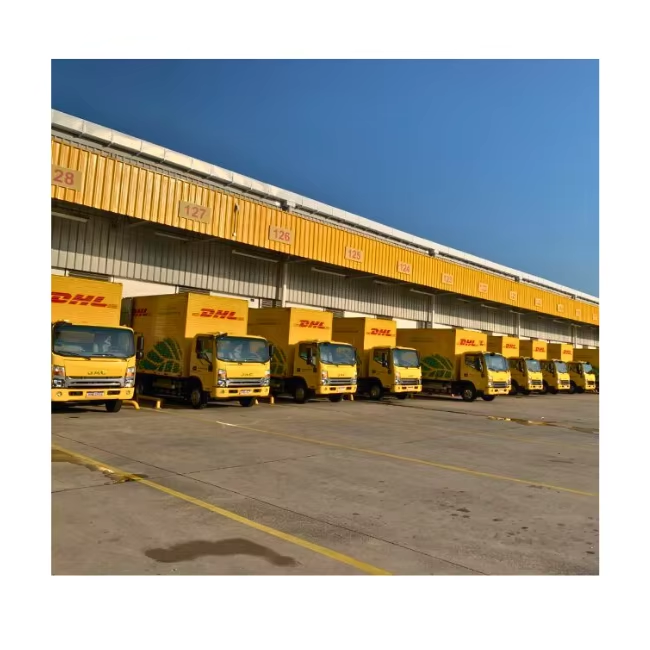
Express air shipping delivers guaranteed door-to-door transit in 2–5 calendar days—ideal when missed deadlines directly disrupt operations, clinical trials, or production lines. Carriers like DHL Express, FedEx International Priority, and UPS Worldwide Express operate dedicated aircraft, priority airport handling, and pre-cleared documentation streams that minimize customs holdups. These services maintain full environmental control for sensitive medical devices, diagnostics, and biologics. While costing 60–70% more than consolidated air cargo (per IATA 2023 benchmark data), they eliminate transshipment points, reduce touchpoints by up to 40%, and deliver >99% on-time performance across Tier-1 corridors.
Consolidated air cargo groups multiple shipments into shared aircraft capacity—delivering 5–10 day transit at significantly lower cost. It’s optimal for B2B components, promotional inventory, semi-perishables (e.g., dried herbs or cosmetics), and mid-value goods where a slight delay carries manageable commercial risk. Industry benchmarks confirm 30–45% average cost savings versus express options, while maintaining reliability across major trade lanes. Unlike sea freight—which averages 30–45 days internationally—consolidated air cuts lead times by roughly 75%, offering a pragmatic middle ground when urgency is real but not mission-critical.
Selecting a provider with deep, verifiable expertise in time-sensitive air logistics is non-negotiable. Surface-level certifications matter less than documented execution capability—particularly in documentation rigor and regulated-goods handling.
Documentation errors cause over 60% of avoidable air cargo delays (Industry Compliance Reports, 2023). Top-tier providers deploy dual-check systems covering HS code validation, commercial invoice consistency (including Incoterms®, currency, and country-of-origin declarations), and air waybill completeness—including shipper/consignee legal names, EORI numbers, and accurate commodity descriptions. One missing digit in an HTS code or mismatched invoice value can trigger manual customs review—adding 2–5 days and $1,200+ in demurrage fees per incident. Proactive pre-clearance—enabled by trusted trader status or AEO accreditation—reduces dwell time at arrival airports by up to 70%.
Regulated shipments demand proven, auditable compliance—not just paper credentials. Prioritize partners with active, verifiable certifications aligned to your cargo type:
| Verification Category | Critical Compliance Requirement |
|---|---|
| Security | ITAR registration (for defense articles), TSA-certified cargo screening protocols |
| Supply Chain | GDP-compliant cold chain (with validated temperature logs), vapor-phase monitoring for pharma |
| Capacity | Bonded warehouse access, IATA Dangerous Goods certification, FDA Importer ID validation |
Without ITAR authorization, aerospace parts face seizure at U.S. or EU hubs. FDA non-compliance leads to automatic detention of life sciences shipments—often resulting in spoilage or abandonment. Always verify certifications directly via government databases (e.g., DDTC for ITAR, FDA’s OASIS for importers) before onboarding.
Real-time visibility isn’t just tracking—it’s predictive operational control. Integrated air shipment monitoring provides live location, status, and milestone confirmation (e.g., “cleared customs,” “departed hub,” “out for delivery”), enabling proactive intervention before exceptions escalate. When weather delays ground flights in Frankfurt or congestion stalls cargo at JFK, teams can reroute, adjust delivery commitments, or notify customers—preserving trust and avoiding costly service failures.
Smart booking leverages historical carrier performance, airspace utilization trends, and predictive analytics to secure capacity on stable routes and avoid overbooking during known peak periods (e.g., pre-Christmas, Chinese New Year). Pairing dynamic ETAs with carrier reliability scores—rather than relying on published schedules—reduces last-minute capacity shortfalls by up to 35%. Comprehensive visibility also surfaces bottlenecks at transfer hubs or customs checkpoints early, cutting remediation incidents by over 30% compared to legacy methods. This shifts logistics from reactive firefighting to confident, data-driven execution—delivering urgency without unnecessary premium spend.
Key factors include the urgency of the shipment, the cargo's value density, perishability, regulatory requirements, and dimensional constraints.
Express air shipping offers faster, guaranteed delivery times (2–5 days) with a higher cost, ideal for time-sensitive shipments. Consolidated air cargo offers a cost-effective solution (5–10 days) for less urgent shipments by grouping multiple shipments into shared capacities.
Accurate documentation prevents delays and extra costs by ensuring customs clearance is smooth. It helps avoid manual reviews that can lead to additional fees and postponed deliveries.
Specialized certifications ensure compliance with regulations for sensitive items, such as pharmaceuticals and defense articles, preventing seizures or detentions that could delay shipments.
Real-time visibility allows proactive management of shipments, mitigating potential delays by providing immediate status updates and enabling companies to adjust delivery plans accordingly.
 Hot News
2024-11-15
2024-11-11
2024-11-06
2024-10-31
2024-10-28
2024-10-25
GES Oriental Global provides top-tier international freight forwarding services, specializing in Amazon, Walmart, express shipping, air, sea, truck, and China-Europe rail transport.




 EN
EN