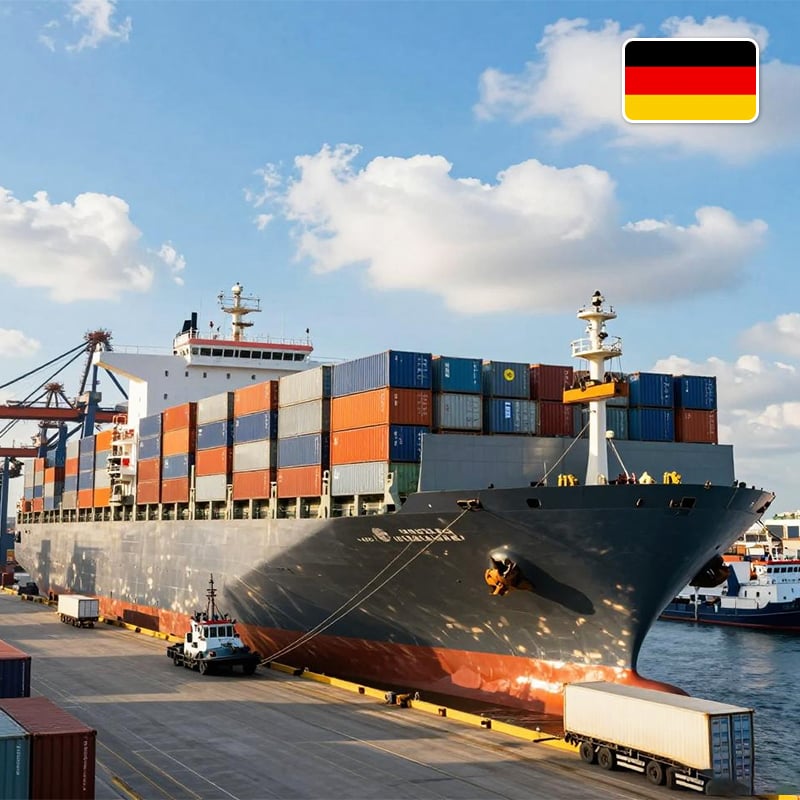
The volume of cargo determines whether a full container load (FCL) or less-than-container load (LCL) is the more economical option. FCL rates are charged per container—typically 20′ or 40′—making them cost-effective when shipments occupy most or all of a container’s capacity. LCL, by contrast, is priced per cubic meter or per ton, with freight forwarders consolidating multiple shippers’ goods into one container. For small or irregular volumes, LCL lowers the barrier to entry by charging only for used space. However, it incurs additional handling fees at origin and destination due to deconsolidation—and often extends transit time by 3–7 days. A widely accepted benchmark: shipments above 15 m³ generally justify FCL; below that threshold, LCL may offer better value after accounting for consolidation charges, documentation complexity, and schedule flexibility. Choosing incorrectly can inflate per-unit costs by 30% or more, underscoring the need for accurate volume forecasting before booking.
The published base freight rate reflects only part of the total sea shipping cost. Several mandatory surcharges significantly affect final pricing. Terminal Handling Charges (THC) cover container loading/unloading at ports and vary by location—often adding $200–$600 per container. The Bunker Adjustment Factor (BAF), tied to global fuel prices, adjusts quarterly and can shift by 10–20% in volatile markets. Documentation fees support issuance of the bill of lading and other regulatory paperwork. On high-volume lanes like China–U.S. West Coast, seasonal surcharges—including peak season surcharges ahead of holidays—routinely apply. Port congestion fees may also arise during vessel delays. Collectively, these extras commonly add 30–50% to the base rate. Importers who fail to request a full, line-item quote risk unexpected cost overruns. Best practice: require transparent, itemized quotes upfront and verify which fees are included—or negotiable—before committing.
U.S. import regulations directly impact landed costs and compliance risk when shipping from China. Section 301 tariffs—imposed on thousands of Chinese-origin products—remain active across multiple tariff lines and must be factored into total cost calculations. Equally critical is accurate Harmonized System Tariff (HST) classification. Misclassification triggers audits, penalties averaging $740,000 per violation (Ponemon Institute, 2023), and shipment holds that incur storage fees and disrupt supply chains. Because tariff rules evolve—especially with exclusions, renewals, or scope adjustments—businesses should consult official U.S. International Trade Commission (USITC) resources and consider tariff engineering where legally appropriate. First-time importers benefit from partnering with licensed customs brokers who maintain up-to-date classification databases and audit-ready records.
Three documents form the foundation of efficient customs clearance:
Inconsistencies between these documents cause nearly one-third of customs delays. Even minor discrepancies—such as mismatched HS codes, values, or unit counts—can trigger inspections or requests for clarification. To accelerate clearance, ensure all three documents align precisely in language, figures, and nomenclature—and submit them electronically (e.g., via ACE) where possible. Digital filing reduces processing time and supports audit trails required under U.S. Customs’ Reasonable Care standard.
Selecting the correct container loading method balances cost, security, speed, and scalability. The decision depends not just on volume—but on cargo profile, business maturity, and strategic priorities.
FCL provides exclusive use of a container, keeping goods sealed from origin to destination. This minimizes handling, lowering risks of damage, theft, or contamination—particularly valuable for fragile, high-value, or temperature-sensitive cargo. Transit times are shorter and more predictable, avoiding consolidation bottlenecks and port-side deconsolidation delays. Customs processes simplify with a single shipper/consignee, reducing documentation touchpoints and inspection likelihood. Once volume exceeds ~15 m³, FCL typically delivers lower per-unit costs than LCL—even after factoring in container utilization. As businesses scale, shifting to FCL improves supply chain consistency, supports just-in-time inventory models, and strengthens carrier relationships through higher-volume commitments.
LCL excels for low-volume, exploratory, or diversified shipments—such as market testing, sample orders, or mixed-SKU replenishment. It enables businesses to ship without waiting to fill a container, supporting agile inventory planning and faster go-to-market timelines. You pay only for occupied space, making it financially accessible for startups or SMEs with limited order volumes. While LCL entails longer transit times and more complex documentation—due to multi-party consolidation—it remains a pragmatic tool when full-container economics don’t yet align with demand. As order frequency and volume grow, transitioning to FCL becomes both operationally logical and financially advantageous—offering improved unit economics, reliability, and control.
FCL, or Full Container Load, means the shipment occupies an entire container. LCL, or Less Than Container Load, consolidates goods from multiple shippers into a single container.
Base rates are calculated per container for FCL and per cubic meter or ton for LCL. Additional costs include surcharges like terminal handling charges and fuel adjustments.
Key documents include the Bill of Lading, Commercial Invoice, and Packing List. Consistent and accurate information across these documents is crucial to avoid customs delays.
The choice impacts cost, security, and timing. FCL often suits larger shipments, offering more control, while LCL is more flexible for smaller loads.
LCL is cost-effective for small shipments and allows for quicker go-to-market as it doesn’t require waiting to fill a container.
 Hot News
2024-11-15
2024-11-11
2024-11-06
2024-10-31
2024-10-28
2024-10-25
GES Oriental Global provides top-tier international freight forwarding services, specializing in Amazon, Walmart, express shipping, air, sea, truck, and China-Europe rail transport.
 EN
EN