Sea shipping remains the most cost-effective mode for moving large commercial volumes across continents. When comparing per-ton and per-container expenses, ocean freight consistently undercuts air, rail, and road transport—especially over transoceanic distances where alternatives are impractical or nonexistent. The average cost per kilogram for sea shipping typically ranges from $0.10 to $0.30, a fraction of air freight rates, which often exceed $4.00 per kilogram for similar routes. Rail and road options, while viable regionally, carry significantly higher per-ton-mile costs and lack the scalability needed for global bulk movement.
The economic advantage is clearest in full-container-load (FCL) pricing. A standard 20-foot container shipped from Asia to North America commonly costs under $2,000—whereas moving the same volume by air would cost tens of thousands of dollars. Rail services, though cheaper than air, still charge three to five times more per container than sea shipping. Road transport over landlocked corridors adds compounding expenses: fuel, labor, tolls, and border-crossing fees. Crucially, sea shipping eliminates weight and dimensional constraints that limit air freight and rail gauge restrictions—modern vessels routinely carry up to 24,000 TEUs, enabling shippers to consolidate volume and dramatically reduce per-unit freight costs.
Container ship capacity has grown exponentially since the 1950s—from a few hundred TEUs to today’s ultra-large vessels exceeding 24,000 TEU. This scaling directly lowers the cost per container: fixed operational expenses—including port dues, crew salaries, and fuel—are distributed across far more units. For businesses shipping 100 containers annually, per-container rates may drop 15–25% compared to a 10-container shipment, thanks to carrier volume discounts and priority slot allocation. Consolidation services further extend these benefits to smaller shippers, allowing them to pool cargo and access tiered pricing. As a result, sea shipping becomes exponentially more economical with volume—making it the definitive choice for enterprises moving cargo at scale.
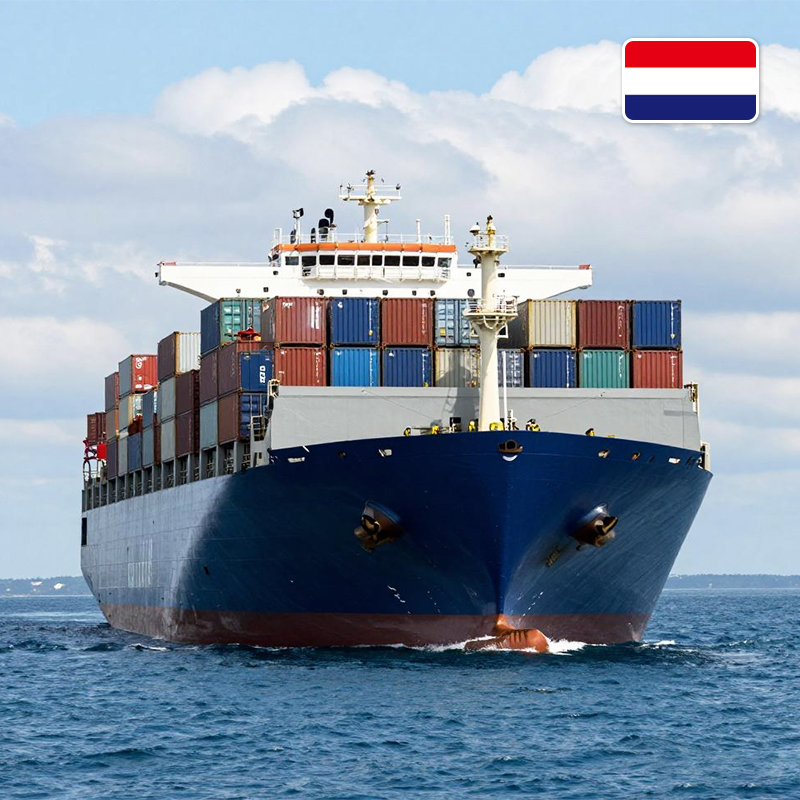
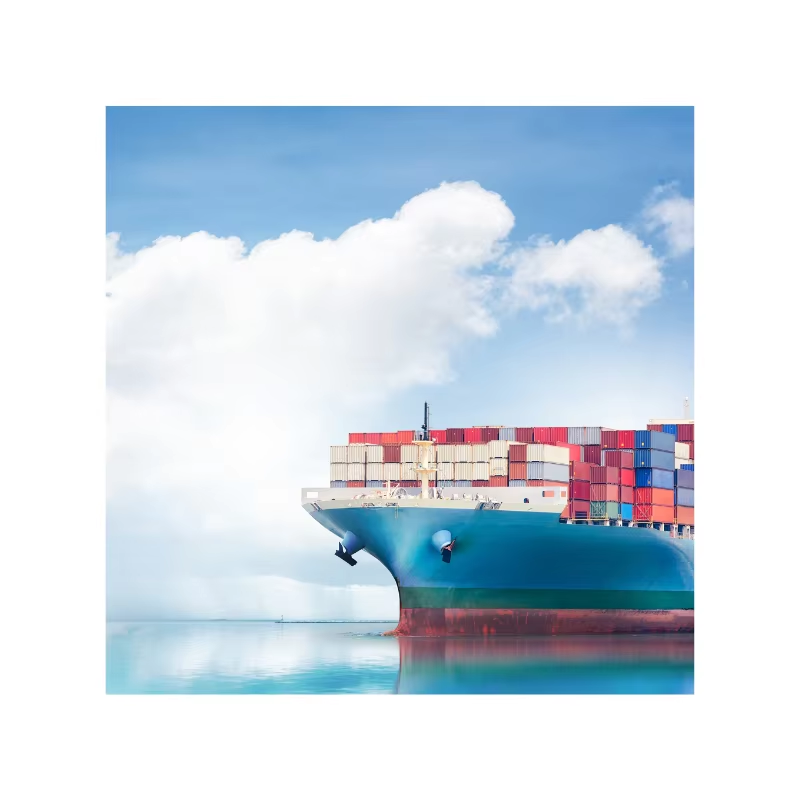
Sea shipping’s unmatched global throughput stems from its massive, scalable infrastructure. Modern container ships now routinely carry over 24,000 TEUs—more than double the capacity of early-2000s megaships—and this growth continues to drive down unit transportation costs.
Over the past decade, vessel size expansion has been both rapid and purposeful. Today’s largest ships move over 24,000 TEUs—nearly twice the capacity of industry benchmarks from just 20 years ago. This growth isn’t merely incremental: it translates directly into efficiency gains. Moving one container across oceans now requires significantly less fuel per TEU than in previous decades—a trend validated by the International Maritime Organization’s (IMO) 2023 Energy Efficiency Design Index (EEDI) data, which shows a 35% improvement in average CO₂ emissions per TEU-km since 2010. Even as ultra-large vessels dominate deep-sea lanes, standardized 20- and 40-foot containers remain the backbone of global trade, ensuring interoperability across ports, terminals, and inland logistics networks.
For equipment that defies containerization—such as wind turbine blades, power plant generators, or modular refinery components—sea shipping offers uniquely capable alternatives. Roll-on/roll-off (RoRo) vessels accept wheeled or self-propelled cargo ready for immediate offloading. Heavy-lift ships, equipped with onboard cranes rated up to 1,200 metric tons, lift and stow irregular, oversized, or exceptionally heavy items below deck—bypassing port infrastructure limitations entirely. These capabilities are exclusive to maritime transport and represent a critical enabler for energy, infrastructure, and industrial projects worldwide.
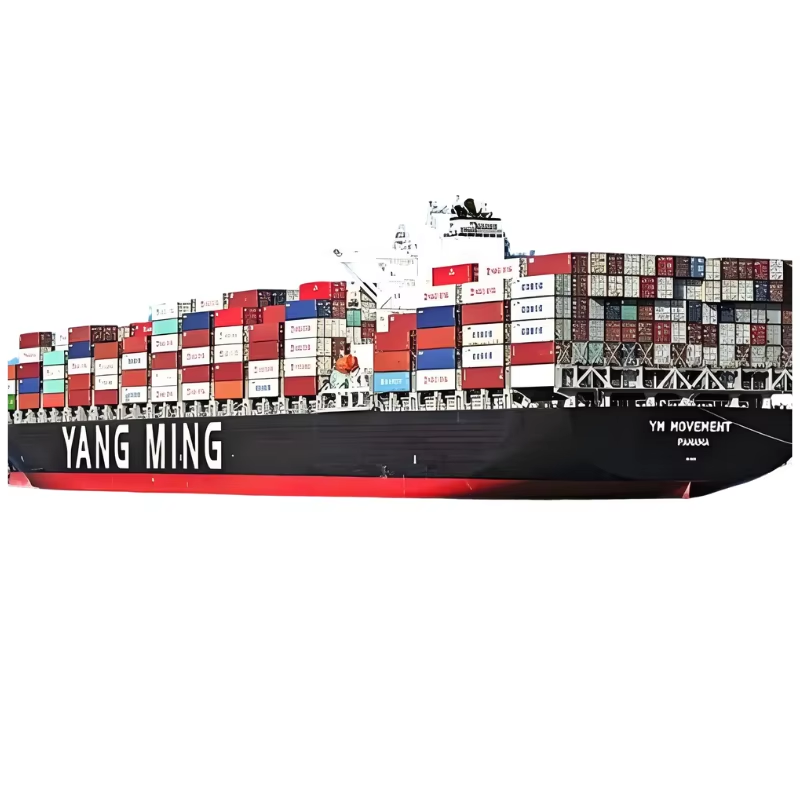
Full container load (FCL) shipping delivers end-to-end visibility and control. Each container is sealed at origin and remains intact until destination—minimizing handling, tampering risk, and loss. Because FCL shipments occupy dedicated vessel space and follow scheduled sailings, transit times are markedly more predictable than with less-than-container-load (LCL) or multimodal alternatives. This closed-loop system provides unmatched security and scheduling reliability for high-value, time-sensitive, or regulated goods—offering a level of operational certainty that air or road cannot match at comparable cost or scale.
Beyond containers, sea shipping accommodates diverse cargo types through purpose-built solutions. Bulk carriers move unpackaged commodities—grain, iron ore, coal, crude oil—directly in vast holds, optimized for speed and efficiency. Break-bulk vessels handle non-standard, oversized, or fragile items like steel coils, timber, or machinery using custom lashing, dunnage, and stowage plans. These modes ensure logistical flexibility without compromising schedule integrity—giving procurement and logistics teams reliable, asset-appropriate options for every class of cargo.
While sea shipping delivers unparalleled cost and capacity advantages, effective deployment requires proactive management of its inherent trade-offs—primarily extended transit times and exposure to external disruptions. A 2023 maritime risk analysis by the World Shipping Council found that over 60% of global shippers experienced significant delays due to port congestion, labor actions, geopolitical volatility, or extreme weather. To mitigate these risks, forward-thinking companies adopt three core strategies: first, diversifying carrier partnerships and port gateways to avoid single-point bottlenecks—particularly in politically sensitive regions; second, integrating multimodal contingency planning (e.g., pre-vetted rail or air bridging options) for rapid response when schedules shift; and third, securing comprehensive cargo insurance that covers both physical damage and delay-related financial exposure. When paired with synchronized inventory buffers, real-time tracking, and collaboration with experienced freight forwarders, these measures preserve sea shipping’s economic benefits while building genuine supply chain resilience.
Sea shipping offers the lowest per-ton and per-container costs, especially over long distances, by distributing fixed operational expenses across a high volume of units.
Larger vessels have dramatically reduced the cost per container by enabling shippers to consolidate volumes and decrease per-unit freight costs.
Sea shipping includes options like roll-on/roll-off vessels and heavy-lift ships that handle oversized or specialized cargo effectively.
Strategies include diversifying carrier partnerships, using multimodal contingency plans, and securing comprehensive cargo insurance to handle disruptions.
 Hot News
2024-11-15
2024-11-11
2024-11-06
2024-10-31
2024-10-28
2024-10-25
GES Oriental Global provides top-tier international freight forwarding services, specializing in Amazon, Walmart, express shipping, air, sea, truck, and China-Europe rail transport.
 EN
EN