A Chinese freight forwarder plays a vital role in modern international logistics, connecting manufacturers and exporters with buyers worldwide. One of the most critical functions that a Chinese freight forwarder provides is access to consolidation warehouse services. Understanding consolidation warehouses used by a Chinese freight forwarder helps businesses reduce shipping costs, improve efficiency, and maintain supply chain visibility across complex trade routes.
Consolidation warehouses represent a strategic asset that every Chinese freight forwarder leverages to deliver competitive advantage. These facilities aggregate shipments from multiple suppliers or vendors into single consolidated containers before dispatch. By pooling smaller loads into full container loads, freight forwarding operations become significantly more cost-effective and environmentally responsible.
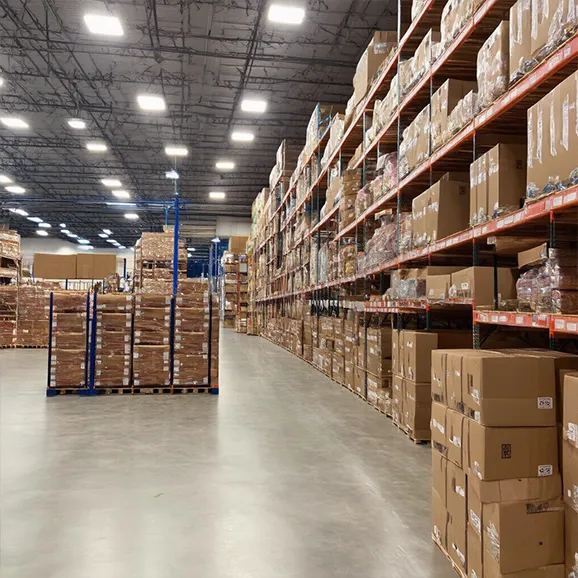
A consolidation warehouse used by a Chinese freight forwarder operates as a strategic distribution hub. When shipments arrive from various manufacturers or suppliers, the warehouse team receives, inspects, and categorizes each item according to destination, carrier preference, and handling requirements. The consolidation warehouse consolidates these separate shipments into optimized container configurations that maximize space utilization and minimize per-unit transportation costs.
Understanding consolidation warehouses requires appreciation for the logistics coordination involved. A Chinese freight forwarder maintains detailed inventory systems that track each shipment's origin, contents, weight, dimensions, and destination. This precision ensures accurate billing, reduces handling errors, and guarantees on-time consolidation windows that meet scheduled vessel departures and customer deadlines.
Freight forwarding consolidation schedules align with major ocean carrier departure cycles. A Chinese freight forwarder coordinates warehouse operations to fill containers on predetermined dates, ensuring consistent transport reliability. This scheduling discipline means customers receive predictable shipping windows rather than arbitrary delays. The consolidation warehouse maintains buffer capacity to accommodate last-minute orders while maintaining service commitments to existing customers.
The primary advantage of consolidation warehouse services lies in dramatic cost savings. When a Chinese freight forwarder consolidates multiple small shipments into full container loads, per-kilogram transportation rates decrease substantially. Businesses shipping small quantities that cannot fill entire containers independently benefit enormously from freight forwarding consolidation. A single shipment that might cost three thousand dollars as a less-than-container load might cost only eight hundred dollars when consolidated with other shipments.
Beyond base transportation rates, consolidation warehouses reduce accessorial charges, documentation fees, and port handling costs. A Chinese freight forwarder spreads these fixed expenses across multiple shippers, creating economies of scale that individual exporters cannot achieve independently.
Modern consolidation warehouse services provide real-time tracking capabilities that enhance supply chain transparency. A Chinese freight forwarder leverages digital systems to provide customers with precise warehouse location data, consolidation status updates, and estimated container closing times. This visibility reduces uncertainty and enables better inventory planning downstream.
Freight forwarding consolidation also accelerates customs clearance processes. When consolidation warehouses maintain organized documentation and pre-clear shipments before departure, border crossing times shorten considerably. Businesses receive goods faster and more predictably, reducing working capital tied up in transit inventory.
A Chinese freight forwarder consolidation warehouse enables small and medium enterprises to compete with larger manufacturers on logistics terms. Companies that previously struggled with transportation costs for smaller shipments can now access international markets profitably. Freight forwarding consolidation democratizes access to global supply chains, allowing diverse businesses to participate in international trade regardless of shipment size.
A consolidation warehouse operated by a Chinese freight forwarder accommodates diverse cargo types, handling requirements, and destination preferences simultaneously. Special packaging needs, temperature control, hazardous material classification, and regulatory compliance vary by destination. Understanding consolidation warehouses includes recognizing their ability to manage this complexity efficiently. Freight forwarding services address these nuances through specialized handling protocols and trained personnel.
When businesses require consolidation warehouse services, they gain access to professional expertise that would cost prohibitively if developed in-house. A Chinese freight forwarder maintains relationships with multiple carriers, understands regulatory requirements across destination countries, and optimizes routing for both cost and reliability. This institutional knowledge translates directly into competitive advantage for shipping partners.
Your shipment undergoes thorough inspection, professional handling, and secure storage while waiting for consolidation with other compatible shipments. A consolidation warehouse used by a Chinese freight forwarder catalogs your goods, verifies contents against documentation, and positions items strategically within containers to maximize space. Your shipment remains insured and tracked throughout the consolidation process until it departs in a full container load toward its final destination.
Consolidation timelines depend on departure schedules and cargo volume. Most Chinese freight forwarder services consolidate shipments within seven to twenty-one days of arrival at the warehouse. A consolidation warehouse maintains regular departure windows to major trading routes, so your cargo rarely sits idle. Freight forwarding consolidation schedules balance the need for timely shipment against the efficiency of accumulating sufficient volume for full containers.
Most general cargo benefits from consolidation warehouse services, including electronics, textiles, machinery, and consumer goods. However, certain products require specialized handling—hazardous materials need specific certification, perishables require temperature control, and oversize items may not fit standard consolidation protocols. A Chinese freight forwarder assesses each shipment's characteristics to determine appropriate consolidation warehouse placement. Freight forwarding companies maintain dedicated facilities for specialized cargo when necessary.
 Hot News
2024-11-15
2024-11-11
2024-11-06
2024-10-31
2024-10-28
2024-10-25
GES Oriental Global provides top-tier international freight forwarding services, specializing in Amazon, Walmart, express shipping, air, sea, truck, and China-Europe rail transport.
 EN